Circle textiles from Almedahls
BECAUSE humanity urgently need to migrate to more sustainable solutions which do not compromise performance.
WE HAVE DEVELOPED a range of fully circular curtains made from naturally biodegradable fabric. These earth friendly fabric can return to the ecological system at the end of their lifecycle, while also offering added benefits for our oceans and wellbeing during use.
ENABLING OUR CUSTOMERS for the first time to choose truly circular curtains for the professional market.
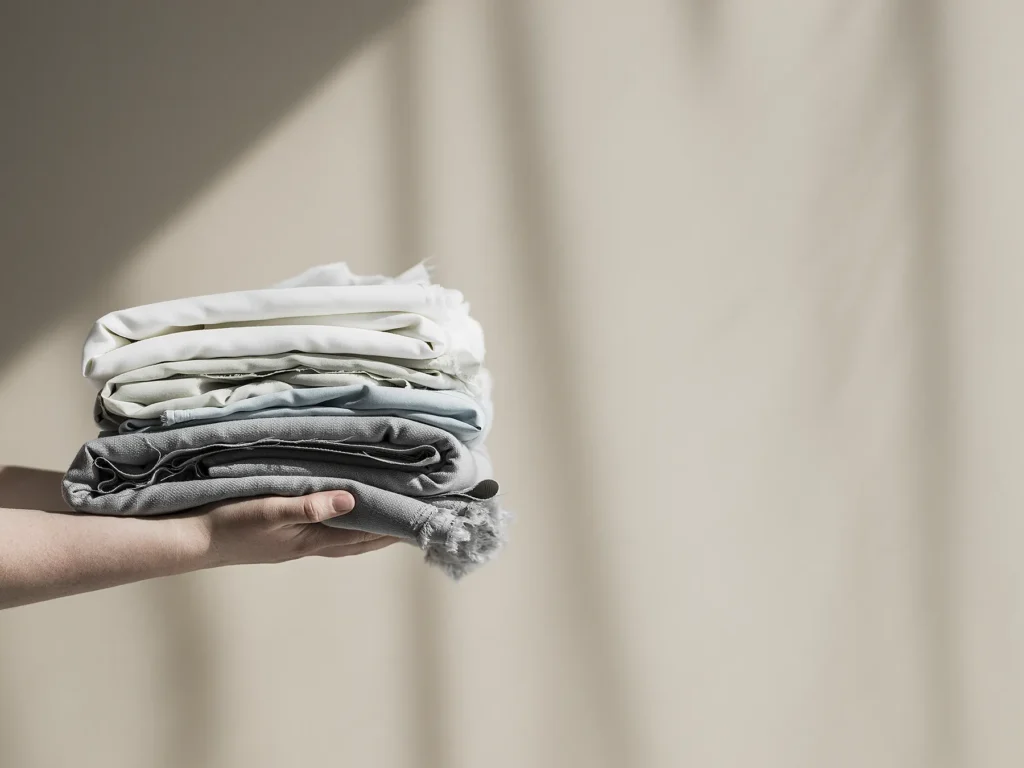
Our circular textiles
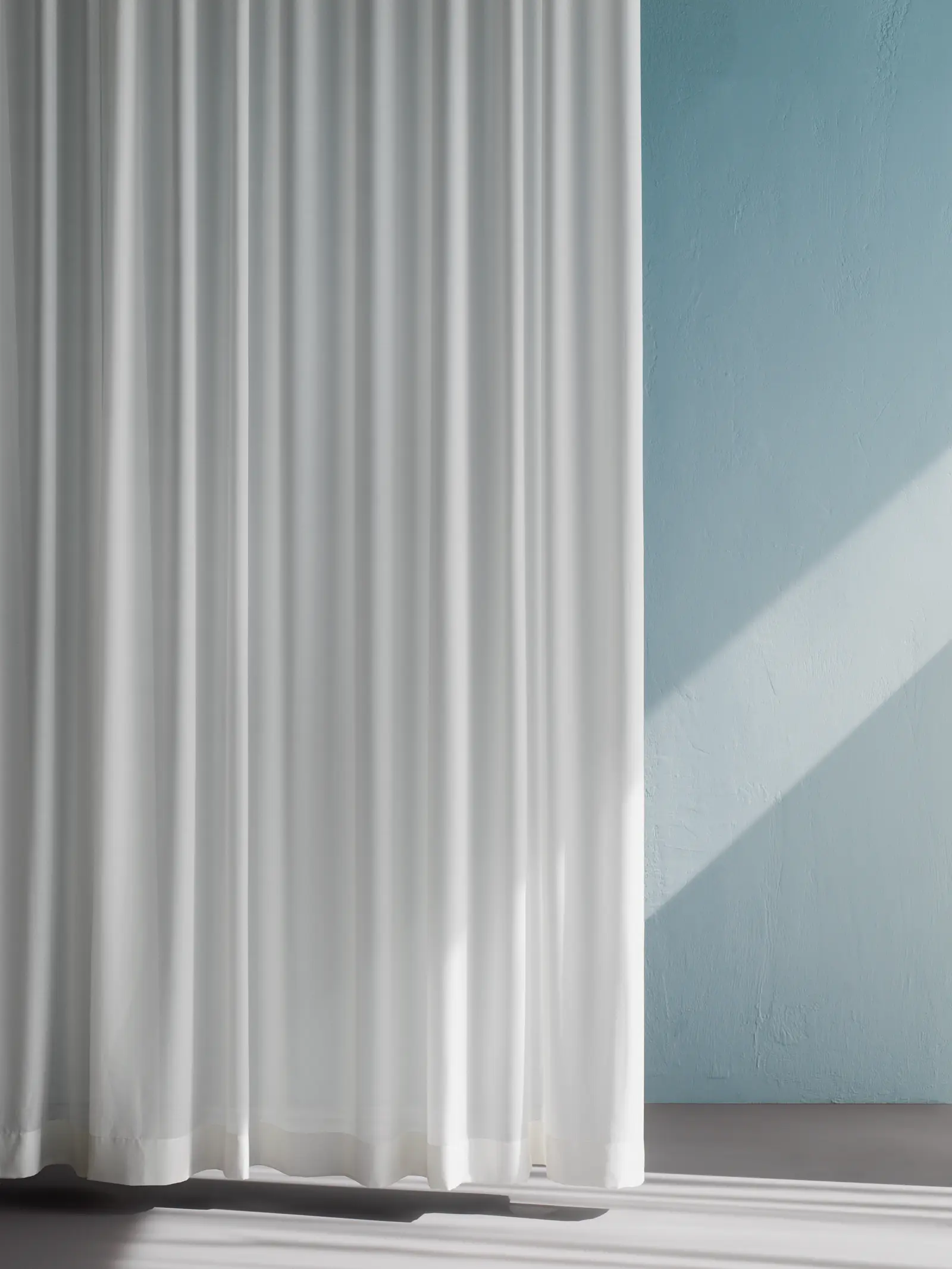
CircleEase
CircleEase in an airy sheer innovative textile with a breezy movement. A modest plain with a matte, milky surface. The gentle, light filtering properties creates a relaxed atmosphere transmitting and elevating the incoming light in a beautiful way. The circular curtain is piece dyed making it uniform in colour and bringing an unpretentious, minimalistic expression. The pared back colour palette has taken inspiration from the elements; the sky, water, sand and rock. It is flexible and easy to adapt to most environments both in front of a window and as a light room divider subtly diffusing the surroundings.
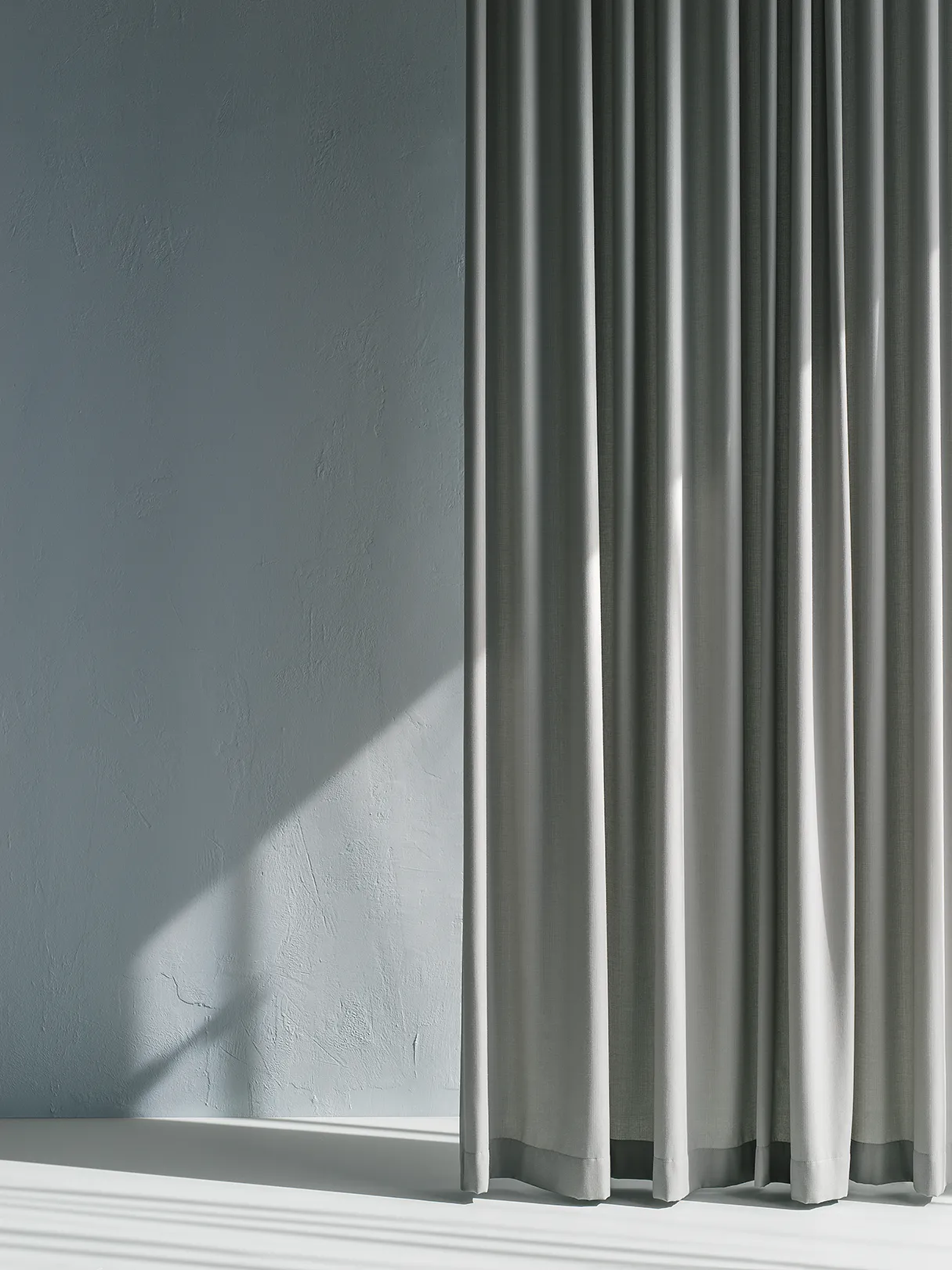
CircleRest
CircleRest is a lightweight, textural, semi- transparent curtain fabric. The refined weave construction gives a distinct materiality, tenderly stimulating the senses. The carefully crafted texture creates a delicate sense of depth to the piece dyed fabric. The pure look, crisp character and precise drape accentuate the sleek and elegant expression. The light nature of CircleRest balance between a sheer and a drapery creating privacy while still letting light through. The colour scheme is versatile and cool, built on contemporary neutrals working as a perfect complement the most common architectural materials as wood, concrete, glass and stone.
The benefits
Water
Circle textiles are toxin-free and release much less fibres into the water when washed. These are biodegradable within only a few days and are non-harmful to aquatic life or the human body.
Because of this, Circle textiles carry the coveted Cradle to Cradle Certified Gold.
Air
The production of the fibres for Circle textiles requires considerably fewer process steps than conventional polyester. This results in a considerable reduction of process energy, CO2 emissions and a positive impact on climate changes through reduced greenhouse-gases.
Waste
Other byproducts of the composting are humus, minerals, water, and biogas to be used in local agriculture and industrial applications.
In other words; no waste.
*monomer = a molecule that can react with molecules of the same kind to form a larger molecule. Monomers form the base of polymers.
Raw materials
In short; raw materials creating the best textile choice for our health and environment.
The few fibres that flow into the water are non-harmful and biodegradable within a few days on land and in the ocean.
Because of this, Circle textiles carry the coveted Cradle to Cradle Certified Gold.
Energy
In the manufacturing process, the energy used is either from renewable sources or CO2 emissions are offset.
*OceanSafe LCA data, based on Idemat database
Fully circular
Once the textiles reach the end of their functional life, we welcome it into our take-back system. The take-back system is currently open only to Circle textiles based on OceanSafe technology. Used Circle textiles are processed in an industrial composting facility. The industrial composting process produces either raw material for new OceanSafe fibres, or base materials such as humus, minerals, water and biogas. Material loops are closed.
Return Circle textiles
Here’s how it works:
Whether you scanned the QR-code on the label, or you are visiting this page to see how the take-back system works; We highly appreciate you taking the time!
If it is time to send us the end-of-use but fully biodegradable Circle Textiles, this is how it works:
All end-of-use Circle Textiles are collected centrally at Almedahls. The textiles will then be sent to the site for industrial composting, where it will take up to 90 days for them to biodegrade. They will be composted into either biomass and minerals, or into fibers for new Circle Textiles. In both cases, the loop is closed and of course:
No toxins and no waste.
Pack the textiles and send your parcel to:
Almedahls AB
Take-back department
Lyddevägen 8, 511 58 Kinna
Sweden
The freight costs are on you, a minimum investment in circularity.
It is also mandatory that the care labels are still attached to the textile so that we may identify them as Circle Textiles.
We will take care of the rest.

We collect all the end-of-use Circle Textiles centrally at Almedahls
Our focus is to make circularity as simple as possible, but for questions or further information, please do not hesitate to contact us.