
Piet Hein by Almedahls
Between the circle
and the square
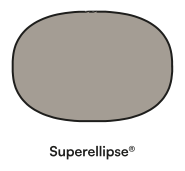
Piet Hein found the shape in between. Together with his trustees, we have made it into a rug and a curtain fabric for rooms where people meet.
The collection
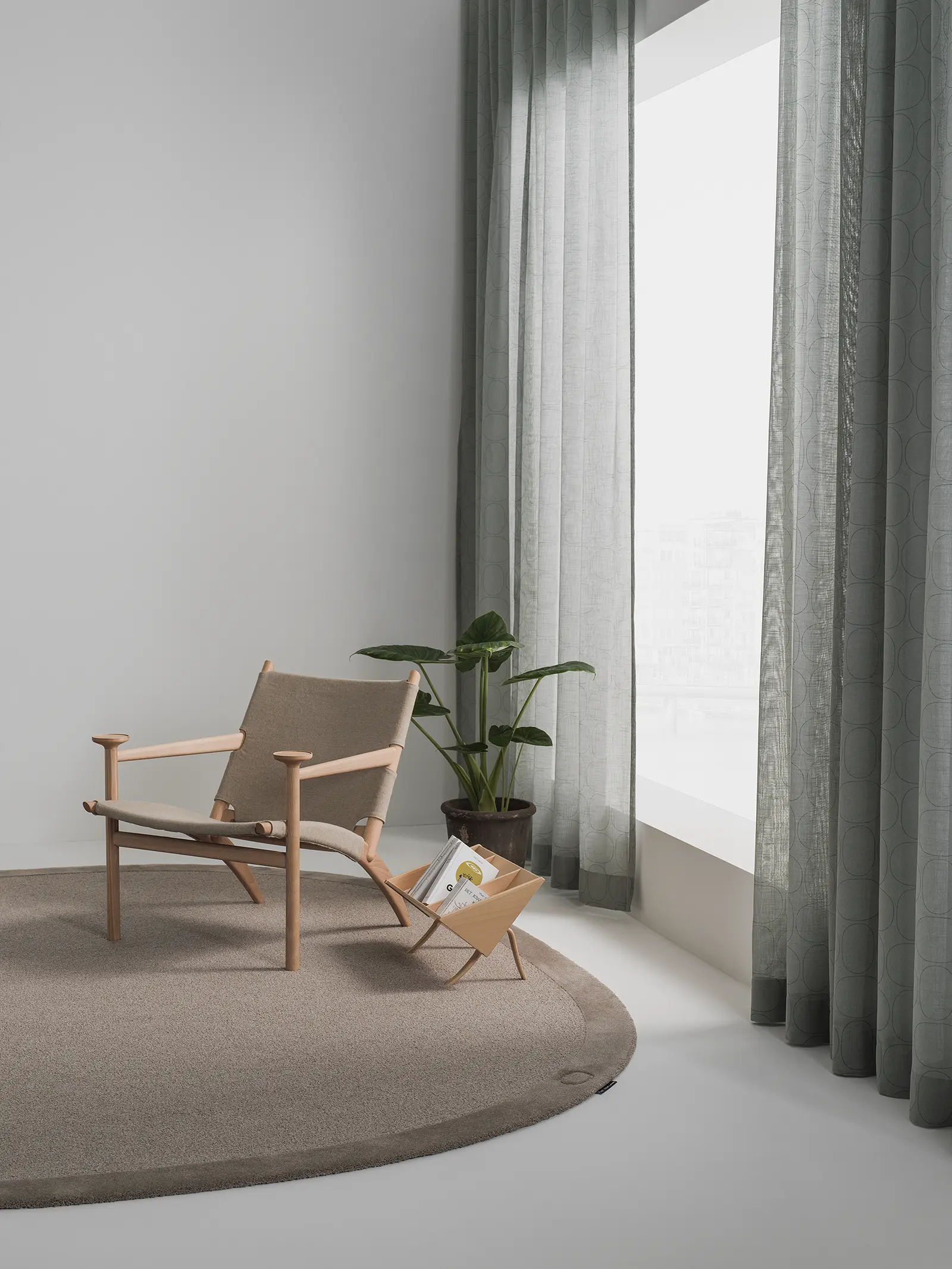
AVGO: rugs shaped by the Superellipse®
AVGO comes in five Superellipse® shapes, all built on the same proportions, and is made in wool to the size you need. Under a meeting table, in a lounge or in a library, the soft corners make the room feel calmer and more open.
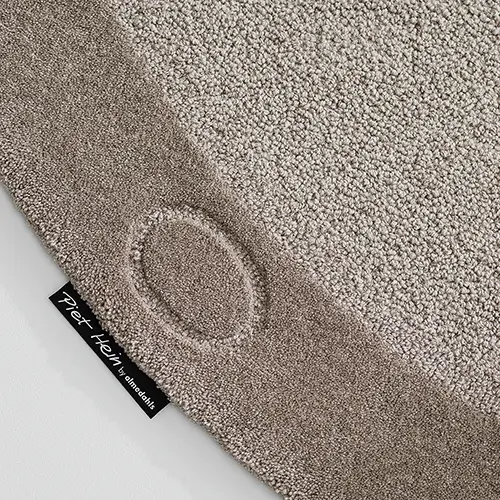
Look closely at the edge: a small Superellipse® is tufted into it. Edge, centre and symbol follow the same curve, just as Piet Hein intended.
INSPIRO: a light and open curtain fabric
INSPIRO has a subtle pattern built from two Superellipse® proportions, and it shifts gently as the fabric folds. It lets daylight in while softening glare, creating a quiet play of light and shadow. The fabric is flame retardant, washable at 70 degrees and comes in five colours inspired by Nordic nature.

The pattern is built from the 4:6 and 5:6 Superellipse®. Piet Hein himself worked on Superellipse textile patterns in the 1960s.
About Piet Hein
Piet Hein (1905 to 1996) was a Danish mathematician, designer and poet. He moved freely between science and art, and found playful answers to serious problems.
Scientist, designer and poet
Piet Hein was born in Copenhagen in 1905. He studied philosophy at the University of Copenhagen, art at the Royal Swedish Academy of Fine Arts in Stockholm and theoretical physics at the Niels Bohr Institute. He never saw science and art as opposites. To him, they worked best together, and that idea runs through everything he made.
Grooks, games and the Soma cube
Piet Hein wrote more than 7,000 short poems, which he called grooks. They are light, witty observations about life and have been published in many languages. He also invented the game Hex and the Soma cube, a puzzle where seven odd pieces fit together into a perfect cube in 240 different ways. It is a good example of how he liked to play with shapes.
Friends who inspired him
He moved in a remarkable circle. Niels Bohr and Albert Einstein were among his friends, and so was Charlie Chaplin. He later wrote about how much those friendships inspired him.
The egg that stands up
Piet Hein discovered that an egg shaped by the Superellipse® can stand on its end without any help. His supereggs, made in wood and silver, became a small symbol of balance: between the round and the straight, and between science and art.
The shape that solved Sergels Torg
When Stockholm planned Sergels Torg in 1959, the architects first tried an ellipse, but its pointed ends got in the way of the traffic and it did not fit the rectangular square. A curve made of circular arcs looked patched together. Piet Hein suggested the Superellipse®, a shape that fitted the square, let the traffic flow and could be repeated in different sizes, one inside the other.
Soon after, Piet Hein and the Swedish designer Bruno Mathsson brought the shape indoors, first to desks and then to tables, chairs and beds.
A shape that brings people together
The Superellipse® has no clear start or end, so there is no obvious place at the head of the table. Everyone can see each other, and the conversation feels more equal. The curves feel familiar yet slightly unexpected, and that small surprise can open up new ways of thinking. It is a natural fit for meeting rooms, schools, libraries and other places where people gather.
Find the right rug size
Download the catalogues
Take a closer look at AVGO and INSPIRO. The catalogues cover the shapes, the colour ranges and the technical details, together with the story of Piet Hein and the Superellipse®.